
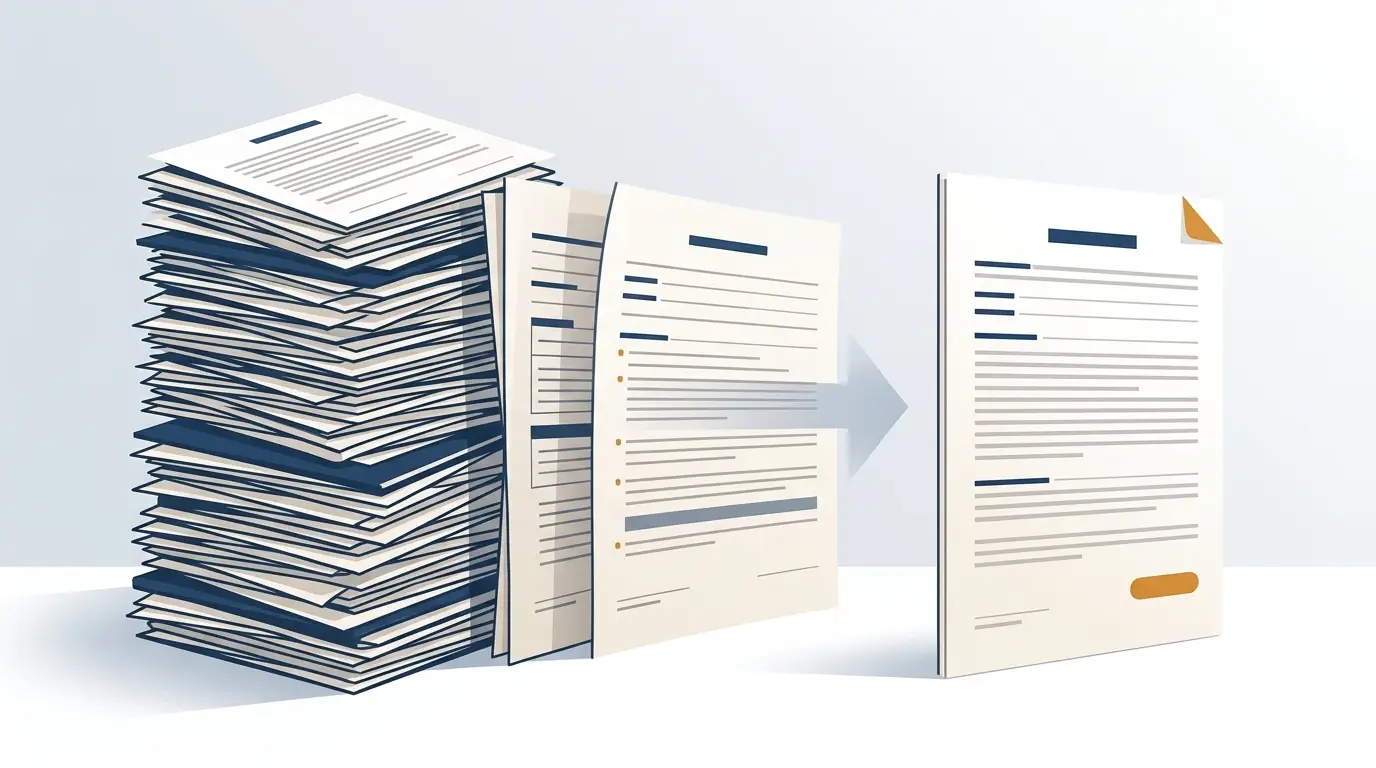
Short answer: streamlining agreements is not about shorter sentences. It is about deciding which provisions are genuinely necessary, which are reflexes, and which belong in a policy. After doing thousands of SaaS and software deals, I can tell you most SaaS EULAs are four to eight times longer than they need to be.
Streamlining agreements is a problem software companies share with every industry that runs on contracts. The good news is that other legal minds have been at this longer than most software lawyers, and the methods they built translate cleanly to SaaS and software EULAs.
The in-house team at Scottish & Newcastle (a beverage company based in Scotland) documented an approach to streamlining agreements they call “Pathclearer.” Graeme Colquhoun, their Head of UK Legal, laid it out in the Law Society of Scotland Journal piece A Clearer Way to Deal, and the team published a longer 8-page article with a template. The idea is simple: strip commercial agreements down to the substance that matters, and push operational detail out to policies and SOPs.
Three moves do most of the work:
Scottish & Newcastle took this seriously. Some of their agreements dropped to two pages, and they let go of fixed terms, volume commitments, and even service level agreements and liquidated damages where the relationship did not need them. Ken Adams, a recognized authority on contract drafting, walked through the same example in Simplifying Contracts, and the vendor takeaway is the sharp one: give a vendor a few key paragraphs (termination, liability caps) and you can drop most of the rest without losing any certainty.
You do not need to go all the way to a two-page contract to get most of the benefit. Here is where I start when I trim a vendor’s paper:
That is the same instinct behind Microsoft’s plain English EULA: write the agreement to answer the question the customer actually has, not to recite formalities nobody reads.
Software companies should look for ways to streamline their revenue-generating agreements (end-user, services, support, and channel) using approaches like this. Trimming them is not just about readability. A shorter, plain English agreement closes faster, survives procurement with fewer redlines, and holds up better if it ever reaches a jury. It is about removing language that creates risk without delivering value. If you want that done for your paper, it is the core of our SaaS contract practice.
For the foundational decision about which contract structure to streamline in the first place, see SaaS Agreement vs. Software EULA: Which Template Do I Need? And for the rationale on what belongs in a contract versus a policy you can change, see Contract or Policy? When Software Companies Should Use Each.
What does it mean to streamline an agreement? It means cutting the provisions you do not need, moving operational detail into a policy you can change, and keeping the few terms that carry real risk. It is editing for substance, not just trimming word count.
Will a shorter contract still hold up in court? Yes, when it is drafted well. A tight limitation of liability, a clear warranty and indemnity package, and clean IP ownership terms do the protecting. The default rules of contract law fill most of the gaps you would otherwise spell out.
Which clauses should always stay? Price and term, the limitation of liability, IP ownership, and the warranty and indemnity package. Those four carry the money and the risk, so they earn their space on the page.
I hope this helps. Trust me on this one: the shortest agreement that still protects you is almost always the best one.
Resources:
This post is for informational and educational purposes only, and is not legal advice. You should hire an attorney if you need legal advice, which should be provided only after review of all relevant facts and applicable law.
Subscribe to get the latest posts sent to your email.