
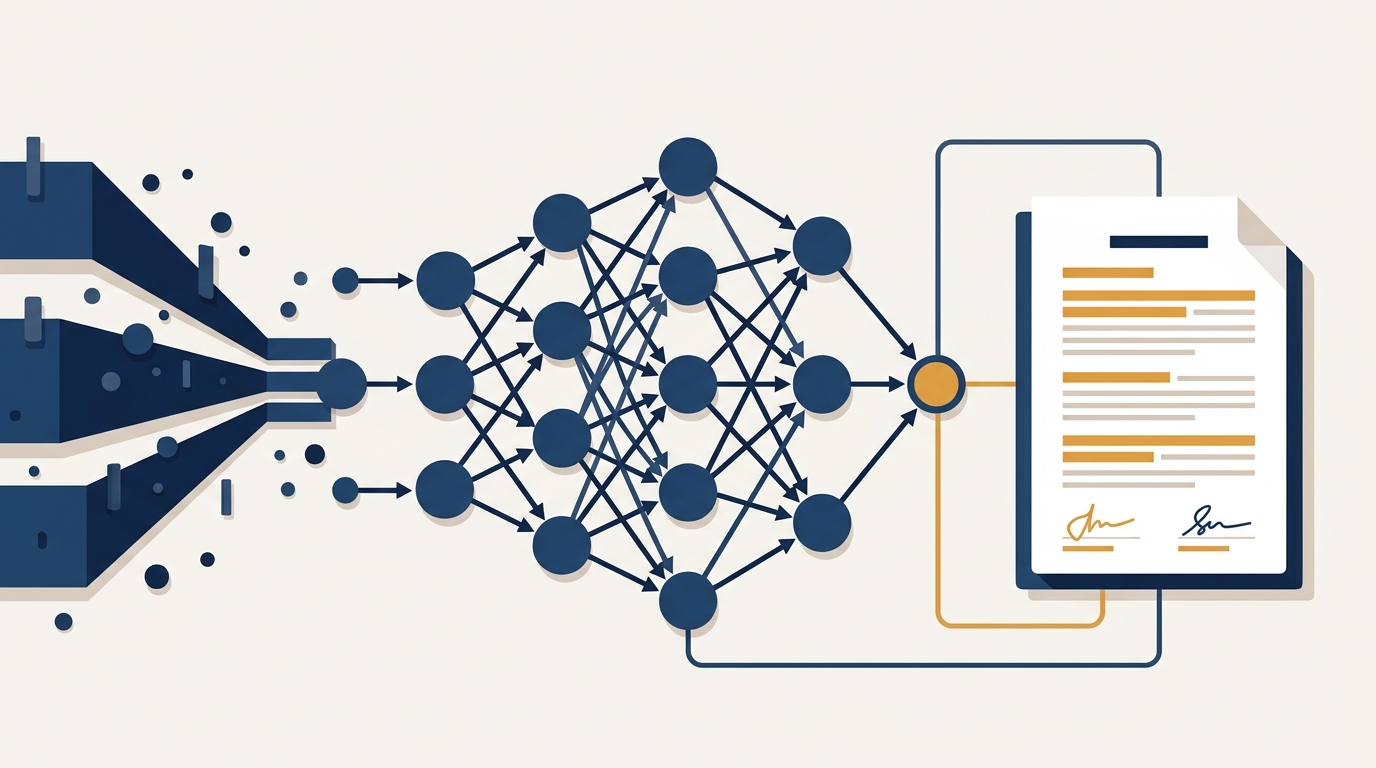
Short answer: AI and machine learning agreements are not standard software licenses. Three issues drive everything: how the system works and who does what, who has what rights to the trained model, and who owns the underlying software and algorithm. Training-data rights and output liability are the two modern battlegrounds.
Machine learning and AI agreements are relatively new and genuinely interesting, and not much has been written on them. So here are a few thoughts on the big issues, from the perspective of the AI or machine learning software vendor.
How the AI System Works and Who Does What.
- Everything starts and ends with the answer to this question.
- It drives the warranties you give, the IP ownership model, and the rights and obligations of the parties.
- Example: whose algorithm is being used? Is this a perpetual or a term deal?
Who Owns the Machine Learning Model?
- Customers usually own their input and output data, but it is not that simple with AI.
- A model is generally the output of training a learning algorithm, then applied to a dataset. The model may contain parts of the underlying algorithm, so ownership of the model matters less than who has what rights to it, and for how long.
- One workable answer: let both parties use the model during the term, then have the vendor destroy it at the end. The vendor stays free to independently build future models, and the customer is protected against its model being re-used for other customers.
What About the Underlying Software and Algorithm?
- This one is easier. The vendor brings the software and should own any enhancements, modifications, or changes to it and its algorithms.
- Every AI system sits on top of or is embedded in software, so industry-standard licensing terms should apply to that underlying software, the same way you would handle any software license grant and metric.
Training Data Rights Are the Quiet Fourth Issue.
Since I first wrote this, training data has become the issue clients fight over most. A model is only as valuable as the data it learned from, so the agreement has to answer: can the vendor use the customer’s data to train or improve models, and if so, are those models used only for that customer or across the whole base? Vendors generally want a right to use de-identified or aggregated data to improve the service. Customers increasingly say “train on my data only for me.” Spell out the scope (this customer vs. all customers), the form (raw, de-identified, or aggregated), and whether anything survives termination. Vague “we may use data to improve our services” language is where these deals go sideways. The copyright stakes around training data are still being mapped out by the regulator: the U.S. Copyright Office is studying the use of copyrighted works to train AI models in its Copyright and Artificial Intelligence reports. This is also a Privacy by Design question; see building privacy in by default.
Who Is Liable for What the Model Outputs?
The other modern battleground is responsibility for the output. AI systems can produce wrong, biased, or infringing results, so do not let your contract promise more than the technology can deliver. Practical moves for a vendor: disclaim warranties on the accuracy or fitness of AI output, make clear the customer is responsible for human review where the stakes are high, and be careful with IP indemnities, because promising that AI-generated output infringes no one’s rights is a big and uncertain promise right now. Tie your indemnity to your own software and algorithm, not to whatever the model generates from a customer’s prompts and data, which is the same logic as the combination exception to infringement indemnities. If you want a structured way to talk about these risks with a customer, the NIST AI Risk Management Framework gives both sides a common vocabulary for governing and measuring AI risk. A disclaimer does real work here too; see why you need a disclaimer in your SaaS agreement.
Frequently Asked Questions.
Can I use my standard SaaS agreement for an AI product? Not safely. The underlying software follows familiar licensing rules, but model rights, training-data rights, and output liability need bespoke terms a standard license does not address.
Who owns the trained model? Frame it as rights, not ownership. Decide who may use the model, whether it is customer-specific or used across customers, and whether it survives termination. A common answer is shared use during the term, then destruction.
Should I indemnify a customer for AI output? Be very careful. Output can be wrong or infringing in ways you cannot control. Tie indemnity to your own software and algorithm, disclaim output accuracy, and require human review where stakes are high.
The throughline: data and model rights are the new battleground, while the underlying software follows familiar licensing rules. When drafting an AI or machine learning agreement, do not treat it like a standard software license. Dig in and figure out the issues, so you and your customers both know what they can and cannot do with the software and the output.
For the foundational decision between a license structure and a SaaS subscription structure that underlies any AI deal, see SaaS Agreement vs. Software EULA: Which Template Do You Need?
Disclaimer:
This post is for informational and educational purposes only, and is not legal advice. You should hire an attorney if you need legal advice, which should be provided only after review of all relevant facts and applicable law.
Discover more from Aber Law Firm
Subscribe to get the latest posts sent to your email.