
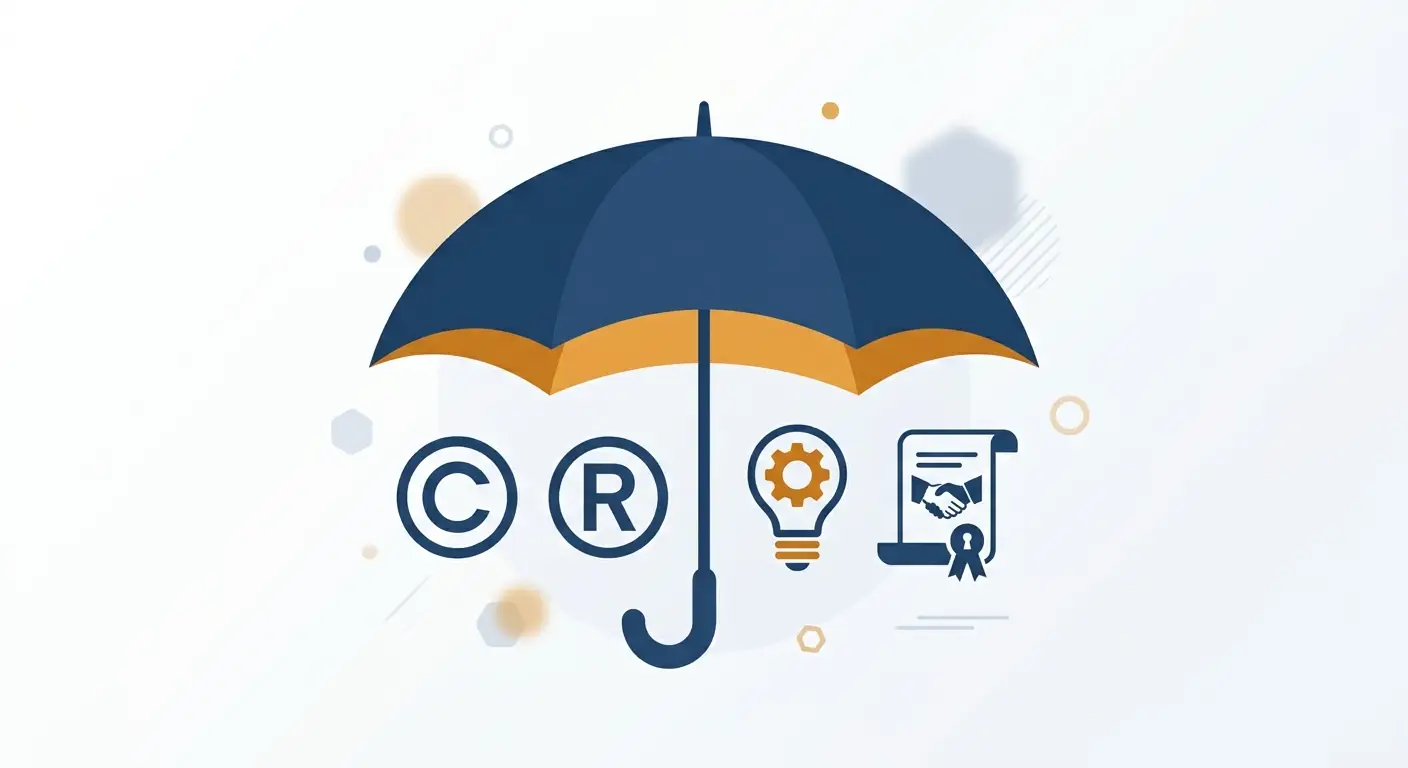
Short answer: intellectual property is an umbrella for four bodies of law, copyright, trademark, patent, and trade secret, and a software company touches all four. Copyright protects your code, trade secret protects what you keep confidential, trademark protects your brand, and patents (rarely) protect inventions.
I get this question often as a copyright lawyer, so here is a brief, plain-English explainer. Think of intellectual property next to the other kinds of legal property: real property (real estate) and tangible property (things you can touch). IP is the umbrella term, and it breaks into copyright, trademark, patent, and trade secret law. When people say “IP,” they mean these four.
Why should an IT company care? These laws define and protect your rights in your most valuable property.
- Copyright law protects works fixed in a tangible medium, such as source code, written content, and images. If someone copies your code without permission, copyright is how you right the wrong. The U.S. Copyright Office handles registration.
- Trademark law protects words, designs, logos, and slogans that identify your products, including your company and product names. You register marks with the USPTO.
- Patent law lets inventors exclude others from using an invention in exchange for disclosing it publicly. It is often skipped because of its cost and complexity.
- Trade secret law protects valuable information you keep confidential, such as source code, algorithms, and customer lists. It lasts only as long as you keep the secret.
Which Ones Matter Most for Software.
For most software and SaaS companies, the practical weight runs in this order. Copyright is automatic the moment you write code, and it is your everyday enforcement tool. So register the important works early, because registration unlocks statutory damages and attorney’s fees. Trade secret protects your source code, algorithms, and customer lists for as long as you keep them confidential, so access controls and confidentiality agreements do real legal work. Trademark protects the brand customers actually buy, so clear your name before you build equity in it. Patents are powerful but slow and costly, and most early companies are better served by the other three. A single product can carry copyrighted code, a trademarked name, a patentable method, and trade-secret architecture all at once.
The Practical Move.
The four regimes work together, and the mistake is treating them as one thing. Each asset falls under a different law with different rules. So map which of your assets falls under which regime. Then put the cheap protections in place first: copyright registration for key releases, confidentiality and IP-assignment agreements with everyone who touches the code, and a brand-clearance check before launch. Every IT company should walk through these rights with its attorney early.
Frequently Asked Questions.
Do I have to register a copyright to own it? No. Copyright is automatic when you fix the work. But in the U.S., registration is what unlocks statutory damages and attorney’s fees, so register your key releases.
What protects my source code best? Two layers. Copyright covers the expression, and trade secret covers the confidential parts, as long as you use access controls and confidentiality agreements.
Do software companies need patents? Usually not at first. They are slow and expensive, so most early-stage vendors lean on copyright, trade secret, and trademark until a specific invention justifies the cost.
A few related reads. Copyright Protection for SaaS Software covers the GUI, source-code, and fair-use intersection. 4 Great Reasons to Register Your Software for Copyright Protection covers why early registration unlocks statutory damages and fees. Copyright Protection for Software’s GUI covers when interface design is copyrightable. 4 Things to Remember About Copyright Law is the foundational primer. What Is Fair Use? walks through the four-factor test. And 3 Things from a Survey of 358 Trade Secret Cases covers the trade-secret side.
Disclaimer:
This post is for informational and educational purposes only, and is not legal advice. You should hire an attorney if you need legal advice, which should be provided only after review of all relevant facts and applicable law.
Discover more from Aber Law Firm
Subscribe to get the latest posts sent to your email.