
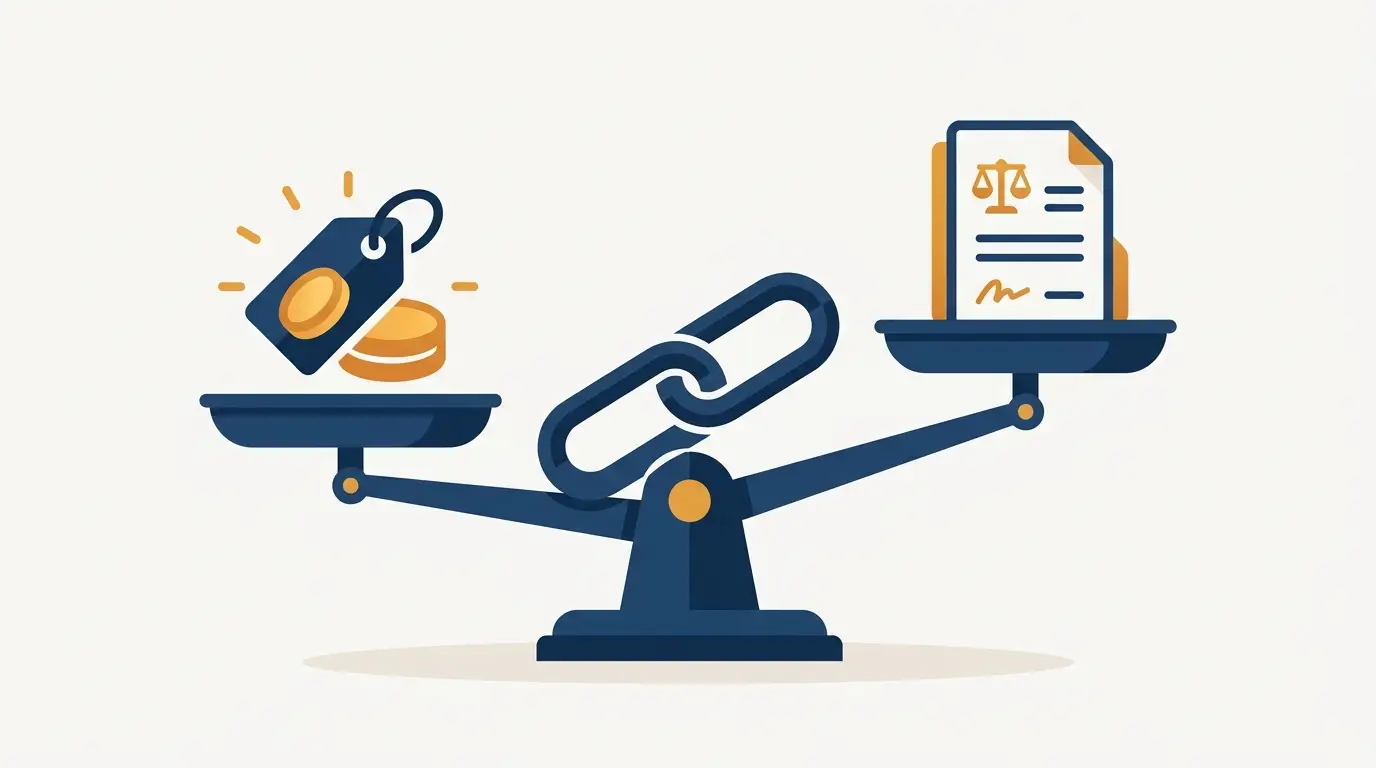
Short answer: yes. In SaaS negotiations you should keep price and contract terms linked, because once price is settled the customer has no incentive to stop asking for more terms, and you end up giving concessions for nothing.
Enterprise customers often want to write their own terms about how they use your SaaS service. The move that protects you is linking price with terms in your SaaS agreement.
1. De-Linking Price and Terms.
Most enterprise customers try to de-link price and terms: settle price first, then come back for custom terms later. I have even seen them use separate negotiating teams to do it. Your job is to keep price and terms linked.
2. What Happens When They Are De-Linked.
Once price is locked and terms are separate, the customer has no incentive to end the negotiation. You give and give terms and get nothing back, because the price is already agreed, so the customer is rewarded for asking for more. I call this “going through the grinder.”
3. What Happens When They Are Linked.
When price and terms move together, the customer has the real conversation about what it actually needs. If a specific term costs more, the customer either pays for it or passes. The incentives are aligned to close the deal. This is the package-deal principle the Harvard Program on Negotiation teaches: negotiate issues together, not one at a time, so trade-offs stay visible.
Real-world examples:
- “If you want X term, we can do it, but it will cost Y dollars.”
- “If you want that discount, we can provide it, but we need a two-year commitment.”
How to Keep Them Linked at the Table.
Knowing the principle is easy; holding it under pressure is the hard part. A few habits that work for vendors. Use a single negotiating sheet. Keep price, term length, commitment, and the open business terms on one page so every request is visible against its cost. The moment you let the customer move terms to a separate track, you have de-linked. Tie every concession to a give. If the customer wants a longer warranty, a higher cap, or a custom SLA, the answer is never a flat yes; it is “we can do that, and here is what moves in return.” Hold price open until the terms are settled. Once you sign off on price, your leverage is gone, so treat a “we’re agreed on price, let’s just clean up the legal points” message as the warning sign it is. This is really just principled, interest-based bargaining applied to a software deal, the approach the Harvard Negotiation Project lays out in Getting to Yes: trade across issues so each side gets what it values most. For vendors the takeaway is simple. Price is your strongest piece of leverage, so do not spend it before the terms that actually allocate your risk are nailed down.
Frequently Asked Questions.
Why do customers try to settle price first? Because once price is fixed, every later term is a one-way concession from you. Separating the two, sometimes with separate teams, is a deliberate tactic to keep extracting terms for free.
How do I keep price and terms linked in practice? Tie every term request to its price impact: a requested term either costs more or trades against the discount or the commitment. Never close price while material terms are still open.
Does linking help the customer too? Yes. It forces the real discussion of what the customer actually needs, so both sides spend time on terms that matter and the deal closes faster.
Whether you link price and terms really matters in SaaS negotiations. We build this linkage into the agreements we draft on the vendor side. I hope this helps.
For the foundational distinction that drives every SaaS contract liability dispute, see SaaS Indemnity vs. Breach of Contract: What’s the Difference?
Resources:
SaaS Agreement Template: Key Clauses Checklist
Disclaimer:
This post is for informational and educational purposes only, and is not legal advice. You should hire an attorney if you need legal advice, which should be provided only after review of all relevant facts and applicable law.
Discover more from Aber Law Firm
Subscribe to get the latest posts sent to your email.