
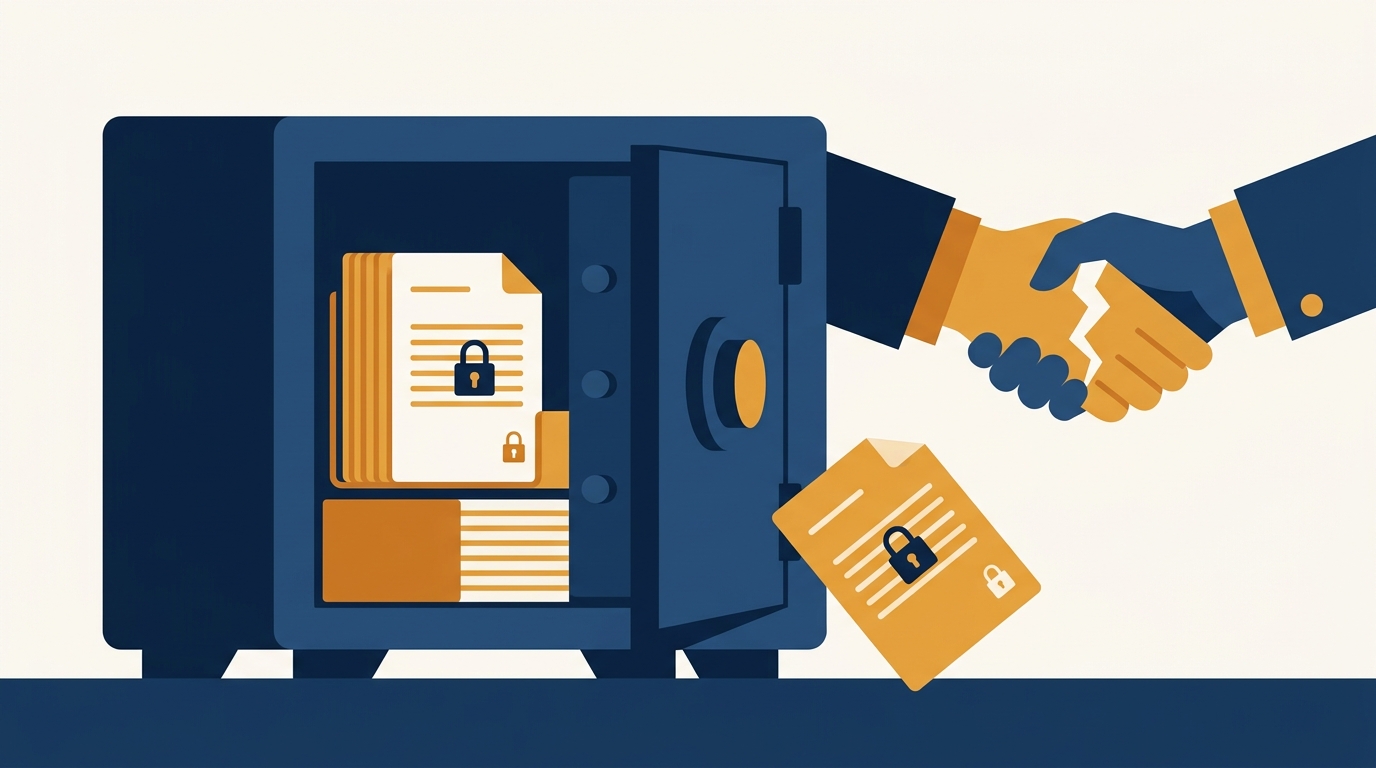
Short answer: a SaaS confidentiality agreement (NDA) is not boilerplate. In the Techforward v. Best Buy case, a startup disclosed its trade secrets to a prospect that walked away and built a copycat, and the NDA is what turned that into a $27 million judgment. Use one, disclose in layers, and guard your crown jewels.
There are some great lessons here about SaaS confidentiality agreements (aka NDAs).
Background. A startup SaaS company, Techforward, disclosed its confidential consumer-electronics buyback program information while trying to win the business of a prospective customer, Best Buy. Best Buy gave all the right buying signals, and Techforward went further, disclosing its trade secrets (the internal workings of its proprietary analytical model). At the last minute Best Buy decided not to buy and instead used Techforward’s information to build a nearly identical internal solution, in violation of the NDA. Techforward sued, and a court awarded Techforward $27 million, including $5 million in punitive damages for Best Buy acting intentionally. A VC even funded the litigation.
Here are three takeaways, because something good has to come from this case.
1. Always Use an NDA When Disclosing Confidential Information.
Two reasons. First, it deters misuse, because most customers will honor an NDA. Second, and more important, if a customer does wrongfully use your information, the NDA is what lets you make them stop and recover your loss. Sometimes a customer does not want to pay for your SaaS service and instead takes your information and builds its own solution, which is essentially what happened here. The NDA is the difference between a bad outcome and a $27 million remedy.
2. Disclose Confidential and Trade-Secret Information in Layers.
Give the customer only what they need at that stage of the buying process. If a prospect wants your most sensitive material, stop and think before disclosing it. A quick checklist before you hand anything over:
- Does the customer really need this level of detail right now?
- Have I shared this type of information with other prospects?
- If I disclose it, is it marked “Confidential Information / Trade Secret of [Company]”?
- Do we have a strong NDA in place first?
3. Protect Your Trade Secrets (the Crown Jewels).
Trade-secret protection only exists if you actually treat the information as secret. So identify your trade secrets, secure and mark them, limit access, and disclose them only under an NDA. Do not share them with third parties unless you truly have to. Techforward did disclose its crown jewels, but that was a deliberate board-level decision made with an NDA in place, which is exactly why it could recover. The same protect-what-matters discipline runs through protecting trade secrets when employees leave and the broader copyright protection every software company should understand, and it pairs with the restrictions you place in your license.
Frequently Asked Questions.
Does an NDA stop a customer from stealing my idea? Not physically, but it deters most customers and, if one does misuse your information, it is what lets you get an injunction and recover damages, as the $27 million award shows.
Should I disclose trade secrets during a sales process at all? Only when truly necessary, in layers, marked confidential, and under a signed NDA. Decide deliberately, ideally at a senior level, before revealing your crown jewels.
What makes something a protectable trade secret? Real economic value from being secret, plus reasonable steps to keep it secret, marking, access limits, and NDAs. Skip those steps and you can lose the protection entirely.
Some prospects are not good customers. Identify and protect your confidential information, and get a strong NDA signed. None of this guarantees a customer will not misuse your information, but it helps a lot in avoiding the Best Buy problem. Trust me.
Resources:
3 Things from a Survey of 358 Trade Secret Cases
TechCrunch: Techforward Wins $27M Against Best Buy
Disclaimer:
This post is for informational and educational purposes only, and is not legal advice. You should hire an attorney if you need legal advice, which should be provided only after review of all relevant facts and applicable law.
Discover more from Aber Law Firm
Subscribe to get the latest posts sent to your email.