
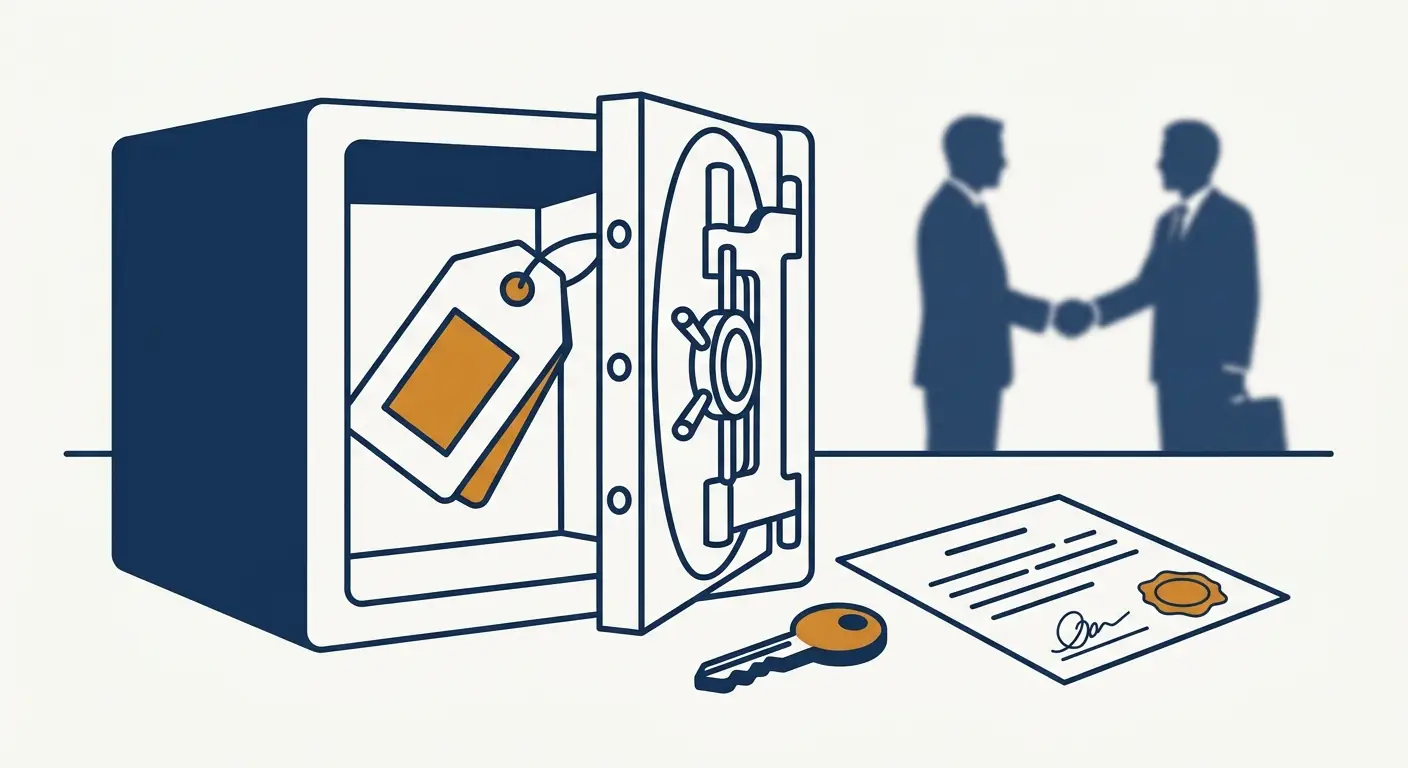
Short answer: your software pricing can be confidential, but it is not confidential automatically. Software pricing confidentiality becomes legally enforceable only when you treat the pricing as secret before it ever leaves your building, and the cleanest way to do that is a signed confidentiality agreement or NDA.
I get this question all the time from software and SaaS vendors, and it almost always comes up right after something has gone wrong. A salesperson leaves and resurfaces at a competitor. A prospect shops your quote around to three other vendors. Someone pastes your price list into a forum. The instinct is to say “but that pricing was confidential.” Whether a court agrees depends almost entirely on what you did before the information got out, not on how upset you are after.
What the Court Said.
A September 2009 Tenth Circuit case, Southwest Stainless, L.P. v. Sappington, illustrates the point well. Former employees solicited business from their old employer’s customers, and they knew the company’s confidential pricing from their time on the inside. The former employer cried foul and pointed to that pricing as a protected trade secret. The practical lesson the appellate court drove home is the one every vendor should keep handy: if a company discloses pricing without a confidentiality agreement in place, it cannot later claim the pricing is a trade secret. The protection is not automatic. You earn it with the paperwork you put in place ahead of time.
When Pricing Actually Counts as a Trade Secret.
Trade secret law (in most states, some version of the Uniform Trade Secrets Act, plus the federal Defend Trade Secrets Act since 2016) protects information only when two things are both true. First, the information has real economic value precisely because it is not generally known. Second, the owner took reasonable steps to keep it secret. Your discount structure, your enterprise rate card, your negotiated floor, all of that easily clears the first bar, because a competitor would love to see it. The second bar is where most software companies fall down. If you hand your full price list to every prospect with no agreement, leave it unmarked, and let anyone on the sales team forward it, you have not taken reasonable steps, and a court will say so.
How to Keep Your Software Pricing Confidential.
- Use confidentiality agreements consistently. One signed NDA out of ten disclosures does not show a pattern of secrecy. Consistency is the whole game. (For a cautionary tale on what is at stake when an NDA is sloppy, see The $27 Million SaaS NDA.)
- Put the confidentiality language where the pricing lives. Build a confidentiality clause into your order form, quote, and SaaS agreement so the protection travels with the number instead of sitting in a separate document nobody signs.
- Mark it, but do not rely on marking alone. Stamping “Confidential” on a price list helps, but it is not a substitute for a signed agreement. Marking plus a signature is the combination courts respect.
- Lock it down with departing employees. The people who walk out the door with your pricing in their heads are the most common leak. Confidentiality and non-solicitation obligations that survive employment matter here. (I wrote about how ugly this gets in Departing Employees Gone Wild.)
- Limit internal access. If everyone in the company can pull the full rate card, that cuts against you when you later argue the pricing was a closely held secret.
The Strategic Call: Confidential or Public.
Here is the part vendors skip. Not every software company should keep pricing confidential, and it is not always a best practice. Public, published pricing can shorten sales cycles, screen out bad-fit prospects, and signal confidence. But if your pricing is negotiated and varies by customer (which is true for most enterprise SaaS), you almost certainly want it confidential. Public pricing becomes the ceiling every prospect negotiates down from, and once the number is truly public you have likely waived any trade secret protection anyway. Your pricing and the rest of your deal terms are linked, so think them through together (more on that in SaaS Agreement: Price and Terms Are Linked).
So decide on purpose, not by accident. Pick whether your pricing is a confidential asset you protect with consistent agreements, or a public marketing tool. Just do not stumble into the worst of both worlds, where you treat pricing as secret in your own head but never put the paperwork in place to back it up. Trust me on this one.
For the foundational frame on the four IP regimes that protect software businesses, including the trade secret law that backs pricing confidentiality, see Software Copyright Lawyer for Vendors.
Resources:
- 3 Things You Must Learn From a Survey of 358 Trade Secret Cases
- The $27 Million SaaS NDA
- Departing Employees Gone Wild, Part I
- SaaS Agreement: Price and Terms Are Linked
Disclaimer:
This post is for informational and educational purposes only, and is not legal advice. You should hire an attorney if you need legal advice, which should be provided only after review of all relevant facts and applicable law.
Discover more from Aber Law Firm
Subscribe to get the latest posts sent to your email.