



Software Licensing Attorney’s View on License Agreement ‘Restrictions.’
As you know, software license agreements contain restrictions (= things you cannot do with the software). As a software license attorney, I would say that these are examples of the most common restrictions (e.g. (1) don’t reverse engineer or decompile the software and (2) don’t let a third-party use the software). However, I would also say that there are unique restrictions out there too. Two very recent big name court cases demonstrate that even the unique restrictions are usually enforceable; let’s take a quick look.
Case #1: In this case the Blizzard Entertainment (the folks that make World of Worldcraft) license agreement has a very unique restriction (see below).
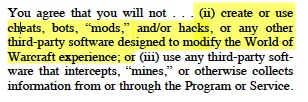
Without taking you through the whole boring details of the case (that is the stuff I do as a software licensing attorney), the court essentially said that this restriction was enforceable and MDY (the company that made a ‘bot‘ that allowed users to advance without actually playing the game) breached the license agreement. Oh yea, MDY also made around $3.5 million from selling the software that performed this task. So not only did MDY make software that violated this restriction, they also profited from it in a pretty big way. Court really don’t like this.
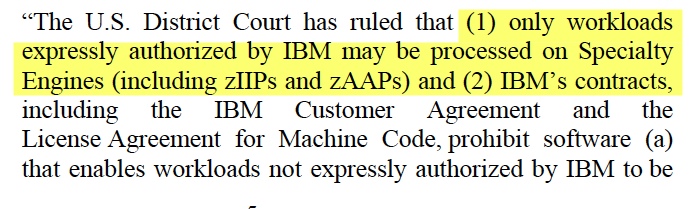
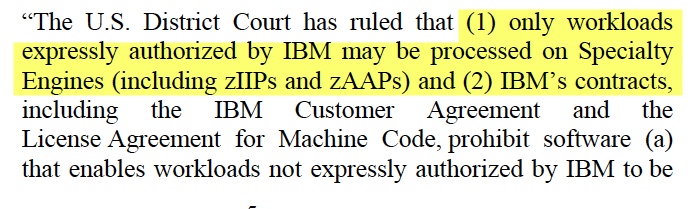
Case #2: NEON Enterprises sued IBM regarding certain restrictions in the IBM license agreement (actually NEON was alleging that these restrictions did not exist). NEON made software that allowed IBM customers to move their workloads around more freely, and was making $ this way. IBM disagreed and said that their customers are restricted from doing this. It seems pretty clear to me that IBM stated in its license agreement that the IBM customer can only use certain workloads on certain processors. It appears that this was enforceable, as at the end of the lawsuit NEON agreed to a permanent injunction withdrawing its software from the market and actually giving the source code to IBM.
Here is some wording from the court order in the case.
License Restriction Takeway
- If you are licensing your software and you need ‘unique restrictions’ in order to protect your software, then think about adding those restrictions to your software license agreement.
Q: Are software license restrictions always enforceable?
A: Actually no (for example clauses that prohibit customers from publishing benchmark tests may or may not be enforceable. Here is an article about it.)
RESOURCES:
Summary of the NEON vs IBM Lawsuit.
Disclaimer: This post is for informational and educational purposes only, and is not legal advice. You should hire an attorney if you need legal advice, which should be provided only after review of all relevant facts and applicable law.